Daily Flash Fiction Challenge 2: Damnation in the Living World

This is the second in a series of 365 Flash Fiction stories I’m writing from 2nd December 2012 until the 1st December 2013. It’s intent is to keep me writing throughout the year, and not just in November. you can find out more about the challenge here.

Damnation in the Living World, by Jonathan L. Lawrence, 3rd December 2012

Word count: 1,000

Theme: fantasy, sex, devil’s pact

Warning: Some relatively mild sexual content, and gore beyond the read more

The story:

In an inn, a huddled figure wrapped in a hood, drinking from a mug.

A well dressed noble entered the inn and looked around, and walked over to the huddled figure.

“You’ve caused me quite a bit of trouble,” the noble said, his voice was that of a snake’s hiss. “Might be, you can make up for your transgression, Raynard.”

The figure grunted, and suddenly found his mind flying backwards through his recent history, quite involuntarily.

Raynard Climes looked around blinking. He had been lying on the battle field amid a pile of soldiers, all dead or dying, his guts trying to escape from the gash across his belly, trying to hold them in, struggling to stay alive. Now he found himself stood up, on what he did not know, because it was just glowing red, all around. He was still holding his stomach though, he could see the blood still seeping.

“Ah, you poor dear,” a woman’s voice said.

Raynard turned behind him, looking for the voice, as he turned the red gave way to something more solid, a bedroom, the likes of which he had never seen before, a room fit for a noble. In the centre was an ornate four- poster bed, and equally ornate furniture.

Then his eyes focused on a lithe woman dressed in a gossamer gown that seemingly covered her modesty, yet offered tantalising views of the figure beneath.

“Won’t you sit?” she asked, nodding at a chair.

Continue reading “Daily Flash Fiction Challenge 2: Damnation in the Living World”

Daily Flash Fiction Challenge 1: The Orchard

This is the first in a series of 365 Flash Fiction stories I’m writing from 2nd December 2012 until the 1st December 2013. It’s intent is to keep me writing throughout the year, and not just in November.

This is the first in a series of 365 Flash Fiction stories I’m writing from 2nd December 2012 until the 1st December 2013. It’s intent is to keep me writing throughout the year, and not just in November. you can find out more about the challenge here.

The Orchard, by Jonathan L. Lawrence, 2nd December 2012

Word count: 1,000

Theme: Supernatural, werewolves, survivalist

The story:

Tony sat in the orchard catching his breath, shivering in the cold night. He remembered back when he was here only a year ago, when he had fallen out of the tree and broke his leg.

For six months he had to use a crutch to get around. It had been a lovely sunny day then, with little else to care about in those halcyon days of summer holidays, and the camaraderie of casual acquaintance. When it happened, it proved painful and embarrassing, he climbed as he high as he dare, and then higher still on a dare. If he completed the dare, there was a promise of a kiss from Sarah Dalstein, a girl of particular beauty in this out of the way little village in Suffolk. However, falling and breaking his leg had dashed his hopes. Everyone was very concerned of course, and then the ambulance came and took him away. When he returned to the village, that his family spent every summer in, he found himself to be the butt of far too many jokes.

Now, here he was running for his life through the very same orchard, the wounds in his side weren’t nearly as painful as the broken leg, but it didn’t feel that much different. Only now it wasn’t only himself that had fallen, it was the whole village to a hoard of werewolves.

“Come on!” he shouted at himself hoarsely, trying to force himself up.

“Hawoooooo!” he heard in the distance.

They were on to him again, this time he didn’t need to shout at himself, their howls were enough to set him going. He staggered deeper into the orchards trying to keep himself hidden, yet instinctively knowing that these wolf creatures that were spreading across the whole of Britain would be like their name sakes, fast, deadly, and keen hunters.

Continue reading “Daily Flash Fiction Challenge 1: The Orchard”

My Daily Challenge for 2013

Introduction to my daily challenge to 365 flash fiction stories from now until this time next year

Okay, so now NaNoWriMo is over for another year, I have to face up to something. I’m not really writing at any other time of year, which is a very bad habit. So, I’ve had this cunning plan of copying someone else sort. There’s a member of NaNoYorks called LittleSparks, who is writing 750 words a day, and has done so for the past 340 days consecutively.

This, I find incredibly impressive, and so I’m going to copy, kind of.

What I’m going to do though is try and do a single story every day for a year. Including right through NaNoWriMo, and the two Camp NaNoWriMo’s that precede it. Completely separate from any other word count scores I should add.

Then, I’ll post them here, after a little bit of editing.

It’s an act of creativity, perseverance, and timing.

It doesn’t matter where I do it, or how I do it, it just has to be done everyday, no catchups, no getting ahead. Each one has to be greater than 500 words, but less than or equal to 1,000 words. It doesn’t have to be super original, in fact I doubt I could do 365 short stories and be truly unique with even a handful of them, so there’ll be cliches, and things might seem familiar on occaision. They will hwoever be my words, and my idea at the time of writing.

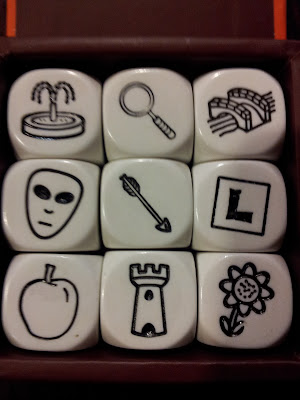
What else? Oh yes, to achieve this awesome goal, I’m going to use prompts. Anything from a random photograph, conversation, and yes my much trusted and used StoryCubes. Where possible, I will try and include the prompt, if someone feels they can do better, who am I to stand in their way?

This is running from today (2nd December 2012), until the 1st December 2013

Anyway, I’ve set up a category for my daily challenge, let’s see if on 2nd December next year I can look back and count 365 seperate posts in there.

In the meantime, a post is coming up with my first offering.

Also, if you want to find out a bit more about Flash Fiction (i.e. very short, self contained stories), there’s a wikipedia page to explain here, and here you can go read countless examples of the art form.


Ta ra folks.

NaNoWriMo 2012 – a long awaited update

No Writing Fail Train for me this year (2012)

Usually during November I post every few days about my NaNoWriMo progress, that is until I crash and burn and end up riding the fail train until the end of the month, (though I did win last year). This year has been different, oh yes, on both accounts.

Usually during November I post every few days about my NaNoWriMo progress, that is until I crash and burn and end up riding the fail train until the end of the month, (though I did win last year). This year has been different, oh yes, on both accounts.

First of all I’ve failed to get round to inane blog posts about my progress until now, (now into the final week). Secondly, for the second year running, I missed the connection to the fail train and gained my win early. In fact at ten days, I was on the success train four days earlier than last year. That’s right, choo choo, I’m a winner again!

Okay, a grown man putting “Choo choo” in that statement may not sound like a winner, but it felt good, and so did winning.

This of course isn’t about rubbing all your noses in my success, (not entirely anyway), it’s about how I succeeded, and what I’m currently up to, (and no its not running round city centre bollock naked going running up to people before going shouting “Choo choo” in their faces – that behaviour gets you sectioned, and NaNoWriMo does not qualify as mitigating circumstances).

So, my last NaNoWriMo post before this, that was actually published, (have a whole post on tools that I didn’t publish, which is good as I went a different way), was all about my final decision for project this year. I originally had decided on three possibilities, and had a whole scientifically inaccurate way for deciding which I would go with.

Then October hit, and the Road to NaNoWriMo was in full swing, and I decided I didn’t want to do it. All that planning won’t go to waste, but it’s not being used right now. Instead I had a grand plan for revolution, with a Tyrant in Downing Street. I’m sure you can see the appeal of this given the times we live, and are likely to be living in in the future.  It’s tough, it’s exciting, and it’s political. What more can a guy ask for in a novel?

So with the planning session for the West Yorkshire chapter of NaNoWriMo, I plotted out my novel, sorted out my main character and time a line leading up to the main events. Then November the 1st at 2:30am (I napped longer than I expected), I got to work on the ambitious story I had in mind.

Another reason for choosing this particular story was I did it as a history book, narrated by a single voice, but telling many of stories of the life and times of said tyrant.  It meant I didn’t necessarily have to care about continuity, writing in the right order and what not, it’s going to be easy to chop and change in editing. Whole sections can be lifted and moved, or indeed just removed without impacting everywhere. It was quite liberating, so much so with a big first day, and a huge Saturday I was well on my way. I was hoping for a Wednesday night finish, (50k in 7 days, epic), however NaNo crud hit early this year and it threw me off my game somewhat in the first Monday and Tuesday of the competition. It was a distraction I could ill afford for the 7 day 50k. So, I didn’t do it. That said, it didn’t stop me, I carried on when I was better, and won on day 10. 5k a day average? I can live with that.

So November 10th was a glorious day, since I won. Unfortunately for my 100k plans, the story lost its traction after that. I’ve stopped it at 52k, and moved onto a new novel, with the aim of doing a second novel in 10 days. So far I’m behind after losing two days to the curse of technology, (my laptop by loathsome ransom ware).  The second novel got me to 100k in eleven days, and I completed the 50k for that particular novel on fourteen days.

Below you can see a chart of my word counts, per day, up until today. I did my best, but I was no where near consistent. (click the image to see the chart in full size).

From Word Counts

Neither is finished, but both need a bit of extra planning to tie it all together and finish off. So I’m calling December finishing month. There’ll be three to do, as tomorrow I’m starting another story. This one will be short, about 25k, just to finish off the last week. I’m not worried if I don’t hit 25k, it’s just a bit of fun.

The plot is entirely driven by StoryCubes, (see below for the selection in question). No idea how it’ll work out, and I’ll probably need more StoryCubes at various points to pad out the plot.

From Story Preparation

I have a whole post in mind as to how much StoryCubes helped me, and how I used them, and the fun. So I won’t share my interpretations just yet. I think though I’m going to do a StoryCube story once a month, just for fun.

It’s early yet, but I’d hate to forget, so here are the obligatory thank you messages.

Thank you to:

  • NaNoWriMo for hosting and organisation the month.
  • The Yorkshire chapter of NaNoWriMo for being such a lovely encouraging forum
  • #NaNoYorks chat room for its many word counts, and encouragements, and putting up with my plot talks, and occasional boasting.

In particular, I’d like to thank (in no specific order):

  • Sparkie, for whom I was desperately trying to race, but out paces me for writing with worrying ease – even hundreds of miles away in her new home.
  • Kerantli, for secretly being the organised and responsible one, and prodding me when I needed to stuff.
  • Rokk, for talks about Bond and plots.
  • BoredRobots, for being the foil to my personal story

A further mention goes to:

  • My colleagues at work that have put up with me talking about things they have not a single care about.
  • My mum for encouraging me, and my dad for taking an interest in the plot.

So yeah, plenty of thanks, and I’ve missed a lot of people out. Some people don’t even realise they’re helping, but they have. I could never have made it through NaNoWriMo these past couple of years without the care and support of all the other WriMo’ers I’ve encountered.

I’m stood here on this podium in tears now… but no one’s handed me an award yet. Ah well.

And the Winner Is…

From three possible NaNoWriMo projects down to just one. Now comes the hard work of building the notes, outlines and other preparation.

So, a few days ago, I mentioned that I’d got three possibilities for this year’s NaNoWriMo project. Well I’ve narrowed it down somewhat, to erm one.

I didn’t go through synopses of them all, I decided instead to think about what was involved in each, write a quick two sentence summary for each, followed by a game of pro’s and con’s. Lastly I performed a series of rankings against set ideas.

So first of all a reminder of the ideas:

  1. Retelling of the Count of Monte Cristo, brought into the post 9/11 age
  2. Continuation of the Crystal Rose Empires universe (follow up to my last NaNoWriMo novel) – a space adventure
  3. Rework of my magic time travelling novel from my first NaNoWriMo

I measured these three ideas as follows –

  • Ease: 2, 3, 1
  • Originality: 1, 2, 3
  • Challenge: 1, 2, 3
  • Length: 1, 2, 3
  • Knowledge: 3, 2, 1
  • Audience: 3, 2, 1
  • Fun: 3, 1, 2

And the winner is… 3 (using the alternate vote system).

Okay, I kind of already decided going to the vote. Option 3 has its short comings, I’ve been there but I’m starting from scratch, the original files are lost somewhere in my anarchic collection of backups. There are things I want to do to improve my original idea, and I’ve five years of accumulative experience to add to the fold.

So now it’s time to hanker down and make with the planning. So far I’ve got 13 characters, (first and second tiers – I’ll let periphery characters come and go as the need arises. Now I have some characters, I’m going to furnish them with details and start arranging them into scenes and chapters.

I’ve got a week to do this, and a little photography project to help storyboard and make the details readily available for when I start writing at 12:01am on November 1st.

Once I’ve got this done I’m going to walk away from the project and work on some short stories. One will be part part of this project – a short back story piece, the writing equivalent of one of the photographs. The others will be completely unrelated, plus there’s also the much needed, much delayed editing that’s needed. So I’m literary fresh for NaNoWriMo.

For the other two novel ideas, they’re going to happen at some point. I’ll probably restart planning the retelling of the Count of Monte Cristo during December with a view to getting started on writing during the Christmas holidays. Continuing the Rose Crystal Empires stories will be a Spring enterprise, and hopefully with proper planning I can do one of those a year has I’ve got some great ideas for where that universe will go over a series.

A Picture Says a Thousand Words

Melding the art of photography into the art of writing…

[singlepic id=63 w=250 h=188 ]

Photography and the Art of Writing

So, I have some money coming to me this September. It’s from my Grandparents, the last of which very sadly passed away last November. Now I’m choosing to think of this money as my final birthday present, it is after all my thirtieth birthday in September. So, having put some thought into what I wanted, and they would have liked to give me, I decided on a camera. A reasonably powerful camera.

My Granddad loved taking photos, and they had lots of them. My Granddad even had a really expensive camera once, which was a shock to my dad and Nana when he brought that home. He may not understand the modern bells and whistles, but I think he would like modern cameras.

Anyway, so the camera is quite a personal thing. However, it’s also about writing. I’ve been using camera’s to help me write for some time. It all started off a few years back when I took a photo of Primrose Valley, (the one in Leeds, not on the East Coast), and wrote a story around it.

Since then, I’ve used photographs, and photography as a tool in a number of ways, some small, some large. It’s a handy tool to keep around.

Now, first of all, if anyone feels like following my usually terrible advice, you should know, it doesn’t matter how good or bad you are at taking pictures for this. I’m really bad – especially when I use my camera phone, (see the picture with this post).

There are all sorts of things to consider when taking a photograph, and you only have scant minutes, if that, to be ready to take it. I do my best with things like lighting, focus, composition and such – and if I get a new camera I’ll be really trying to get to grips with all that stuff. As a writer though, you don’t really need to worry about it.

As a writer what you need from photographs might be:

  • A catalogue (for description) of:
    • Things
    • People
    • Places
  • Ideas (inspiration)
  • Basis for story boards (planning)

Description

If you’re anything like me, (and there are some people out there that might be), you might struggle to do descriptions. I’m too busy writing to think about how something looks, it’s a distraction when in the flow of writing really. I mean, getting descriptions right is a very delicate work, and if you forget if a pattern had a green stripe over a blue, and instead go green over red, that’s a basic mistake that’s easy to miss in editing.

My solution is, as I write, I have in mind pictures, either from my anarchic photos folder, or from pictures, and clips online, stick them in a OneNote (or whatever your visual notebook of choice is, online or off), with a  note to who it relates to, and when. Then you can come back to it, in a quiet moment and give some definition to your very basic description.

This is great, because you can then sync up all your descriptions, (without repeating the same words), in such a way as you don’t contradict yourself.

This is probably the most useful reason for photography, and to be honest it really doesn’t matter if you take the photos yourself. I think it’s good to though, you choose the cars you want in your portfolio, the buildings, the rooms, the clothes, and the people. Google Images works just as well though.

Ideas

So, I’m not infallible, I have really fantastic ideas. I mean blow your mind fantastic ideas, but a lot of them never become something I can actually use. They’re too disconnected from reality, or their too real they’re mundane. Maybe I have a great concept, but nothing that really makes it concrete.

I need ideas to to tie it to, pictures are great for that. They give a bare bones idea some fleshy substance. Where I have a scene or a plot but no characters, I can have a visual representation of one. Maybe I’ve got a character, but no world for them, well I can pick some scenery shots, or a building, or maybe just a car, whichever, the character now has a universe, no matter how small. It’s something for the idea to interact with, which means it’s less likely to fade.

In my most recent NaNoWriMo Project, the Arsène Frassin space adventure, somehow I ended up with just two female characters in the whole thing. Not intentionally, I’d like to thinking I’m not a male chauvinistic pig, it’s just where the story went. However in editing, I’m going to insert a few female characters, and it’s helped to utilise images, (that I got from Google Images, wandering around taking random up close shots of women, won’t help you with your career as a writer, unless you want to write from behind bars),  to try and find suitable characters to a heavily male dominated universe.

Story boarding

Now, this one is new to me, but I definately see the potential. I’m on my big planning kick for the past couple of years, one of the things I want to try for NaNoWriMo 2012 is to not just have an outline, but a story board. Here I’ll already have key images set up, and laid out in reasonable order that progress with the story. Instead of hastily searching round for a descriptive picture I need to use later, I’ll have it to hand so maybe I can be more descriptive in my first draft.

Now, for stroy boarding, I can’t draw for toffee. Just a few very simple sketches, and maybe a technical drawing or two, but I can use photographs. Handily, for this year’s NaNoWriMo project, two of my three choices are set in the present day, which means I can take photos of places, people, fashions, and things that will be relevant to my novel. For the space option, I’ll have to get more creative, a combination of a visits to the Royal Armouries in Leeds, airports, and suh can fill the gap in the futuristic sides of the novel.

I’ll need shots of as many people as possible to drill down to my core characters, and same with palces and things. Always take too much, you can filter out what’s there to the essentials you need. Which is true of many things in life, to be fair.

So, once I’ve got all my pictures ready, using the outline, I can use OneNote, or Word, or Publisher, or my whiteboard to layout a story board and put the pictures on it. Choosing a picture to represent the core aim, location, character, or event for each chapter, or scene. If you want to get complex, (and let’s face it, I’m a complicated guy, so I do), you can do varying levels of story boarding. Starting at the overall plot, then each layer goes into more and more detail.

Before you think I’ve gone nuts, I should point out I’m a Business Analyst, and this is often how I go about designing process maps. So it makes sense to me, if you want to do a story board, find the way that makes most sense to you. Which is true of any advice you find online, or in books, or the random drunkard who once wrote a story long before he became a alcholhic, and insists on telling you how the best way to do it is.

Lastly

I mentioned, you don’t have to be particularly good, and that’s true. You don’t need a fancy schmancy camera for this, the camera on the phone will do just as well, (and whether you’re on iPhone, Android, or Windows Mobile there’ll be great apps for cataloging your photographs). That’s how a lot of mine get taken, from my phone, though I do prefer a proper camera when I can, sometimes the perfect thing that needs capturing is at the time you’re least likely to be carrying a camera. Make do, having the photo is better than not having a photo because you couldn’t have taken it perfectly.

I should add a note of caution, make sure you don’t appear like a peeping tom, it’s no good sticking your lens into people’s homes without permission for instance, and it’s no excuse for stalking.

And one final bit of advice, get a couple of high resolution crowd shots, within those crowds should be a mix of gender, ages, race and other cuts of society. When you’re stuck for inspiration for a character, get out the picture and point at one at random, then see if you can work them up into a character, complete with physical appearance and description. It’s a bit like people watching, only more convenient when you’re at home on your computer writing.

Happy snapping, and happy typing to you all.

P.S. I included that particular photo for a reason, aside from getting the law of thirds very roughly right, getting lead-in lines, it was done on my camera, and came out blurry, which is unimportant, it’s a great item for the story board for one of my ideas. Plus it didn’t contain any people, so I couldn’t offend anyone.

Road to NaNoWriMo 2013 starts here

The Road to NaNoWriMo 2013 has officially commenced, and already the first road block is in the way, what to write? I’m down to three choices, all very different, and now I need to choose.

So I’ve been a bit quiet on here for a bit too long – the same is true of my writing.

After my success at NaNoWriMo 2011,and personal difficulties during and after, I wanted 2012 to be a significant year, unfortunately I stalled on editing my NaNoWriMo novel. It needs a serious re-write to turn my main character into a bad guy, with sympathetic qualities who reluctantly becomes the hero the universe needs, from where he was in the first draft which is a good guy in a bad guy’s job.

I know what I needed to do, but I choked for now. I will come back to it later on I’ve decided.

But choking doesn’t stop there, aside from a couple of false starts I’ve not written anything original. I have however had some great ideas, which is what I’m going to write about now.

You see, one of the things that helped me last year was the planning I did for my novel. I may not have ended up following the exact plan, but I had enough of an idea about where I was going that I was able to do 50,000 words in two weeks, and finish the story around 75,000 within three weeks. I learnt something, I’m not good at ‘pantsing’, (writing by the seat of your pants). So this time round I’m considering several possible stories, and doing my best to outline them.

Before I get into what my ideas are, I should mention targets. This year, for NaNoWriMo, I’m going to completely aim over the top. My personal target for the month of November will be 125,000 words. It’s doable, my daily word rate for the three weeks was 3751, to hit 125,000 in 30 days would be 4,166. Not a huge stretch, but it won’t leave much time for stopping and struggling for the next idea needed to keep the story moving. So planning is going to be key, and this year I’m trying to plan better.

I have three possible novels this year:

  • Firstly, one I’ve wanted to do for a while, a modern retelling of the Count of Monte Cristo, set in London, Paris, and New York. The world is primed for it, and can fit around the events of the novel to really come alive. Downsides, what I have in mind is quite complex, easily 125,000 words, but a lot of is nitty gritty detail of the revenge operations.
  • Secondly, a continuation of the universe created in last year’s NaNoWriMo novel, involving a new protaginist, a new antagonist, a wholly different adventure that might, or might not run consecutively, or concurrently to the original story. Challenges, 125,000 might be a bit long for a space adventure novel of the type I write.
  • Thirdly, a complete restart of my first NaNoWriMo novel from back in 2008, I’ve learned a lot since then, I never actually got it finishedm (though I hit the 50,000 mark just), and I think about it alot. Goal, to fully re-imagine the story to make it easier to read, give the characters more history and depth, and give them more urgency – 125,000 words might be long, but it gives me a chance to explore the nature of the world.

At this stage I’m not sure which I’m going to go with – I’ve already started outlining the Monte Cristo project, but I realised it’s possibly too much for NaNoWriMo – I know a lot can be done in editing, but I would really want to get in the revenge plots as well as I can and just need to clean them up for the second draft. It involves really looking at ways you can screw over bankers/investors/hedge fund managers and the like, and achieve a satisfactory level of revenge.

The others would be easier on many levels, the space pirates universe is easy to write for, it’s largely pulp fiction, with easy rolling story lines, multiple arcs that intertwine, but fun as well as there’s politics, dubious motives on characters and nations. The rework of my 2008 NaNoWriMo is easier because I know the story, certainly the first three quarters, and I’ve got great ideas for thinking about, (imcomplete projects are rarely far from my mind).

Once I’ve gone through the Pro’s and Con’s of each idea, I’m going to write a summary, (just a line or two for each about the principle character(s), the situation, and the goal), and if after that I still can’t decide, I’ll have to go all out and do a synopsis of some description for each one.

The great thing is, which ever two I don’t do for NaNoWriMo can be my projects for the 334 days after NaNoWriMo. I’ve got time booked off this Christmas, (usually I work except for the bank holidays), so I think that’s a good time to start my first post NaNoWriMo novel.

I turn 30 this year, so I’m determined that this year will be the turning point where I knuckle down and not get distracted from….

Ooh look shiney!

Sorry, I won’t get distracted from my writing.

With even more planning going into this year’s novel, I’ll hopefully have plenty to say. Plus, I’ve some other ideas for articles that would be worth exploring… so you might just be stuck with me for a bit.

The Curse of Communications Technologies

Technology is a pain in the rear end. For us writers especially. In my post on tools I used for the 2011 NaNoWriMo what I used was mostly late 20th and 21st century technology, which while generally fantastic aids to storytelling, do have their traps (the Technology Trap™ as I have decided to title it).

However beyond that writing in a world of technology is a real pain in the rear, too. The worlds you create, and that your characters must interact with have their own traps and pit falls, and equally rewards when things work out.

Here’s how I have learnt to pick my way through this prickly problem.

Technology is a pain in the rear end. For us writers especially. In my post on tools I used for the 2011 NaNoWriMo what I used was mostly late 20th and 21st century technology, which while generally fantastic aids to storytelling, do have their traps (the Technology Trap™ as I have decided to title it).

However beyond that writing in a world of technology is a real pain in the rear, too. The worlds you create, and that your characters must interact with have their own traps and pit falls, and equally rewards when things work out.

It’s a problem that writers have increasingly faced when writing about their own time, and/or future times over the past century or so. Jane Austen had it relatively easy, she only had three basic forms of communication to deal with:

  • Face to face
  • Letters
  • Grapevine

Dumas mixed it up a bit with some technology in the form of the semaphore and news media. It was all a lot simpler though, and constrained. Since then communications technology has come on in leaps and bounds. It is now feasible that people can go days without meaningful real world communication, (I mean face to face verbal and body language and such), but communicate regularly throughout a day through one of the following:

  • Facebook
  • Twitter
  • Peer to peer chat services (MSN, AOL, Facebook chat)
  • Forums
  • Email
  • Text message
  • Phone calls (especially mobile ones)

It’s a nightmare if you want to convey a sense of a modern world in your story. Sure a quick phone call, or a summary of an email is easy enough to handle, but communication is so instant, distant, constant, and intrusive that you’re probably better off ignoring most modern communication just to keep your story flowing, even though in all likelihood your character would deal with this stuff, (even mildly technical people are sucked into it these days).

I write under the philosophy that this type of communication should be kept to what is necessary for your story anyway, it is surprisingly easy to drift off into subplots that are made up of communication, but do nothing to drive your story. Even if it’s really interesting character developing stuff, your readers might not appreciate it quite the same way.

Something else to bear in mind, when you feel you need to expose your story to modern communications technology, we generally use a different form of our language in written forms of communication. So that character voice you’ve worked so hard to develop will become confused and diluted with the addition of another voice that is theirs and not quite theirs.

Another hint, (because I’m full of advice today), if you have to fit in a text, email, facebook status or an instant message, avoid acronyms, you’d be surprised how many readers won’t know something you think of as very common. It should go without saying that these should appear nowhere else in your novel unless you want a character or narrator to be truly obnoxious.

It doesn’t stop with modern communication though, how people communicate is pretty tied into the structure of societies. Completely ignore it in a futuristic piece and you risk society being something akin to neanderthals in space, with over half your book being travelling to communicate or your cast of characters being severely isolated from the rest of the universe that should exist.

In my NaNoWriMo novel this year, it was set in space hundreds of years ahead us and to get round the communication problems, I had to have a range of communication methods from infrequent near range video signals,  to mid-range text like transmission system, and a slow moving information network system that could spread across the galaxy.

Even with all that I still had to fit in near range personal communications via a smartphone like device because it makes no sense at all to be restrained to a desk to ask the engine room why they’re not breaking the laws of physics yet. Because you also need modern like communications to cut down on travelling through your world just for petty but important plot points. As much its nice to describe your world your readers and your characters will get equally bored and tired. There’s a need for balance, but wherever possible I put the extra effort in for real interactions, you learn a lot more about your characters that way, and you can include a lot more subtext in the communication.

So it’s a tough job to get all this organised in a cool and consistent way, without cluttering your story, and without reducing the believablity. Once you do though, you’ll have a lot easier to read story.

I stand by the method of avoiding communications that don’t involve face to face interaction as much as is feasible. I’d rather read real human interaction with all it’s intricate conscious and sub-conscious messages intact. Something increasingly lost in modern communication.

Having said all that, one of my current works in progress relies on Twitter posts as a way to provide narration about the wilder world during a cataclysmic event, but aside from brief cut outs to a Twitter news feed, the interactions with the world are mostly in person, with just the odd text and phone call to provide real time distance communication with a goal. So watch this space to see if I can see if I can get it to work, against my own general advice.

NaNoWriMo 2011 – From Week Two to the End

NaNoWriMo 2011 week two, or as I shall hereby refer to the 45th week of 2011, ‘ The week that won it’.

I’m sure you can guess why, if you can’t, or even if you can because I want to show off, as of Sunday 13th November I hit 50,000 words (50,443 to be precise). Can’t validate until the 25th November, but still after falling short two years running, to hit a second week finish feels great.

I can tell you, it was quite a buzz to hit the 50,000 mark, and I didn’t stop there. Week three saw me push on with the aim of hitting 75,000 words, including “The end.” Want to know how that went? Well I did that too. Though, it was a bittersweet second victory, someone I loved dearly passed away on the Saturday, and I contemplated on just stopping with 8,846 words still to go. That wasn’t the memory I wanted to have of someone I love passing, and though it was a slog, I finished at 75,114 on day 21.

So, the last step of the immediate NaNoWriMo process is to validate your win. And I did.


So there you go – I officially win this year’s NaNoWriMo. I have a badge to prove it.

However, I have decided that there is more to NaNoWriMo than simply writing 50,000 words though – that’s goal number one, with a couple of sub-goals that are worth noting. Below I’ve listed important steps in the writing process as I see them right now, (I reserve the right to grow as a writer and evolve these later*).


Continue reading “NaNoWriMo 2011 – From Week Two to the End”

Tools for NaNoWriMo 2011 (Planning)

So I’ve talked about the planning I’ve done and am still doing for NaNoWriMo but not about how I’m going to be working.

First of there’s how I’ve done the planning. There are obvious tools such as the browser I’ve done online research from (Firefox on my PC, and Dolphin Browser on my phone), and then sites such as Wikipedia,  space.about.com, and news websites (for the latest science and technological developments and theories). Nothing ground breaking there, I’ve been using a lot of science based sites to flush out details I can populate my universe with, but some sites on the history of piracy, and 16th, 17th, and 18th century naval life.

That’s all great but once I’ve got it, whether it’s snippets or whole articles I need to store it so that I can access it again, preferably offline so I’m not distracted by the internet later on. For this I use Microsoft Office OneNote – something I’ve had for ages but never gotten round to exploring for writing. It’s good, I’ve two projects on there, one for all that juicy research, the other for character bio’s and scene/locales.

I’m also using an app on my phone called Thinking Space (I’m using the pro version, but the free version doesn’t restrict you other than listing some screen retail to ads). This is a mind mapping (or brain storming if you want to call a spade a spade) tool, it’s a lot lower on detail than one note but has the advantage of quickly summarising thoughts and ideas and showing how things are interconnected. It’s in Thinking Space I’ve also mapped out the structure of the story, so I can clearly see what each chapter needs to include to feed events four or five chapters further into the story, and ultimately the end. Hopefully it means no loose ends at the end, and if I can keep it up to date it gives me a to-do list of changes I need to make in editing if things happen later in the story that weren’t originally part of the plan and need supporting events.

Other basics in the planning stage include Microsoft Word, Notepad, and a calculator. Then there’s my Kindle, where I’ve been reading plenty of similar sci-fi, and piracy novels. They’d also a few travel guides on there as this is an interplanetary novel each location needs to be distinct but something that can be related to by the Earth found denizens of today’s earth. It helps to borrow from out countries, cities, and cultures to enrich my fictional universe, lest everything in the universe somehow looks and feels like Leeds.

Add into that Google Sky Maps, Google Translate, and we’ve pretty much got everything I need for a space based science fiction story.

These are the tools I’ve used fire the planning, and they’ll be reused in the writing stage, but added to by things that are geared to better improve my writing, speed me up, andkeep me going. I’ll cover those in a subsequent post dedicated to that subject. I’ll do one in January to show the tools I’ll use to edit this story. For other novels I’ll try different tools and review them.